
What is Cohousing?
In order to help solve our growing local housing crisis, we must be willing to try new types of housing developments. The oversized McMansions that most builders prioritize today are too expensive and out of alignment for most homebuyers. The average household size has decreased significantly in the past twenty years. However, smaller homes are few and far between. Many prospective buyers get nervous when purchasing a smaller home because of the lack of amenities.
There is a newer housing type that is starting to pop up around the nation, which holds solutions to people who want the privacy of their own homes, but a shared community of an established neighborhood. Cohousing is a model derived from Europe where smaller houses surround a shared common space. This could mean a shared green, a clubhouse, or a dining facility. Importantly, cohousing taps into the economies of scale. Not everyone needs to have a lawnmower or power tools. What if you owned them in common? This is similar to how many condominiums work in practice. There is a key difference though: intentional design to facilitate neighborly interactions that are deeper than simple conversations outside.
Many cohousing developments have community kitchen spaces where at least once a week shared meals are held. Cohousing is also a democratically governed housing type that maintains homeownership, but allows for collaboration on programming and shared resources like tools.

Trip to Bellingham Cohousing
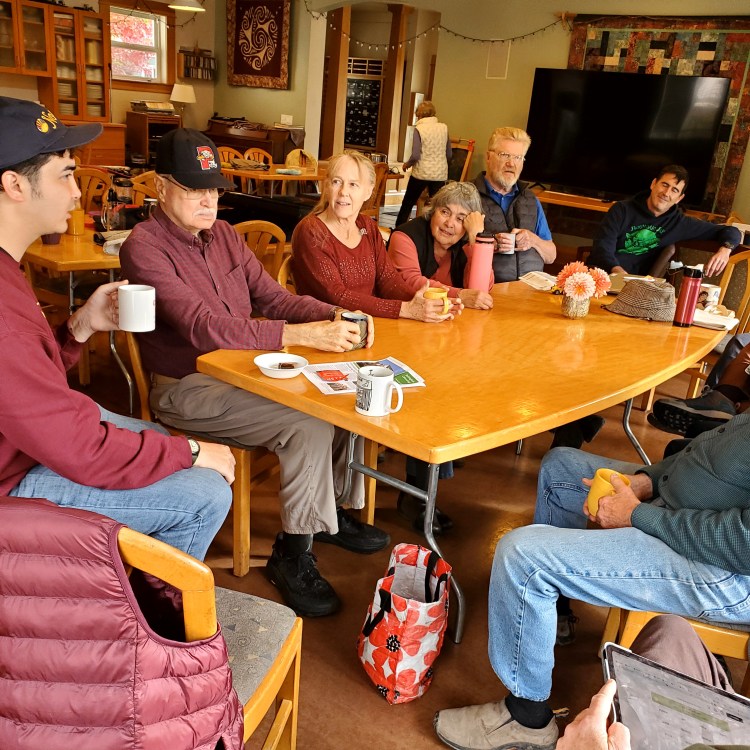
This October I happened to be traveling to the Pacific Northwest for a wedding. It gave me an opportunity to visit an actual cohousing development in the flesh. Bellingham, Washington is home to Bellingham Cohousing, a verdant complex near the popular Fairhaven District that opened in 2000. I emailed the contact information on their website and a nice lady named Karen invited me to join in on morning tea in the common house. 15 other residents showed up and regaled me with their times living in cohousing for the past quarter century.
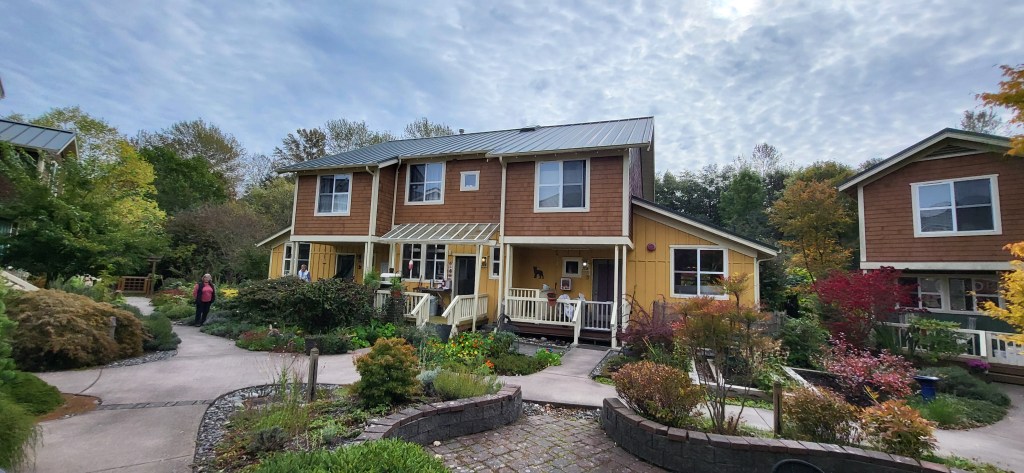
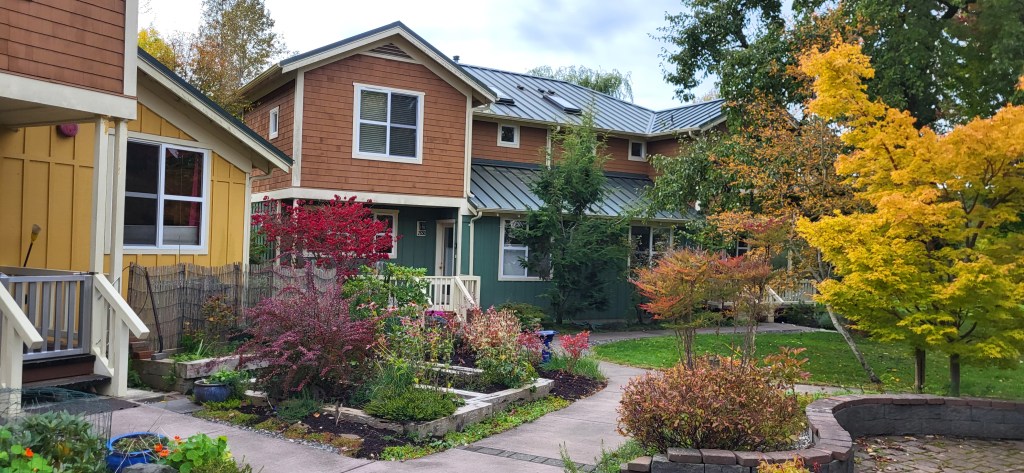
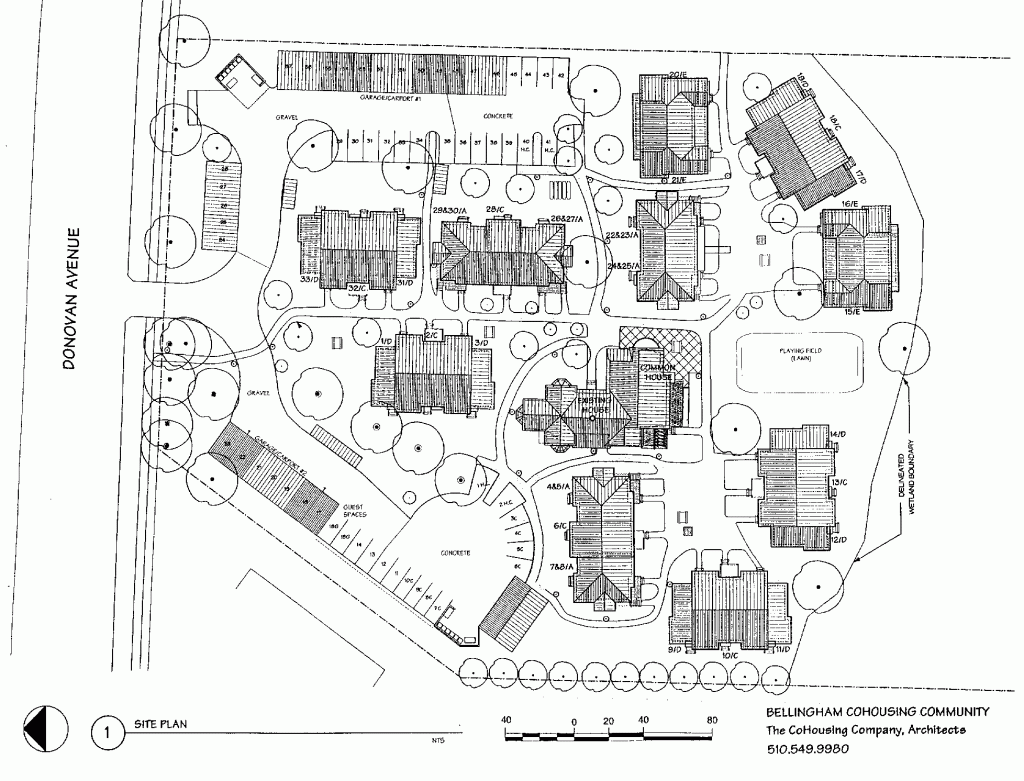
Its nearly 6 acre plot has 2.5 acres reserved for a wetlands easement, the remaining land has 33 for-sale condominium units spread out in a human-scaled context. Home to over 70 people, it did not feel crowded at all. Bellingham is unlike other apartment developments, it felt much more natural. Winding paths, covered porches, beautifully manicured trees and native plants, and bright colors really made it feel like a village instead.
What makes cohousing different from the run-of-the-mill real estate developments is the fact that it was created by and for its residents. Cohousing Bellingham got its start with 6 members contributing $20,000 each for a down payment on the lot. Over the course of the design and construction process, which lasted from 1997 to 2000, members of Cohousing Bellingham worked with a licensed architect, a general contractor, and the city planning staff/commission to get this project over the finish line. Everything had to be decided: size and number of units, general layout of the site, the size and amenities of the common house, and much more.
Bellingham Cohousing is governed through consensus-building and committee work. Everyone who lives there is expected to put in at least 9 hours of work a month: whether it be the finance committee, maintenance committee, or the meal team, there are jobs that certainly match the various personalities and proclivities of the residents. As a legally recognized condo association, the group levies HOA fees for general maintenance of the common areas. Right now the $400 a month HOA fee includes utilities and internet as well.
What struck me most about the cohousing community here was just how nice everyone was. The 70 or so people were very neighborly with each other, they kept eyes on each other’s kids, worked together on woodworking projects, and tended to the gardens. There was a playground, a grass field for sports, a tetherball, and kids playing in the common house and on their own porches. Many gray-haired people also populated the settlement too, with most of them living here for over 20 years. Cohousing is an excellent place to age, as the social connections are built into day to day life. I routinely under-guessed the ages of residents by 10 or 15 years!
A common misconception I often hear about cohousing is that it would be hell for introverted people. In fact, many people at Bellingham Cohousing are introverts! Everyone has their own private domain, and these introverted people just have easy access to neighbors and support in case they need it. There are some people who do not go to all the community functions, but might volunteer some hours in the community garden or organizing the shared library.


Common House
At the center of the community was a hybrid structure. Originally a 1910 farmhouse, it was added onto when they built the cohousing community: with a great room, a mailroom, a community kitchen, an office, a communal laundry room, and two guest bedrooms.
The spacious great room was the location of the morning coffee that I attended, and it was filled with light from the massive windows and skylights. Long wooden tables that residents designed and built themselves filled the room, and residents filed in to use the shared coffee pot and tea kettle.
Karen explained to me that having this morning coffee with each other is one of the most important rituals because it helps develop casual community over the course of the years. Sharing jokes over drinks is much better than scrolling through social media alone as a morning routine.
Every aspect of this house was intentionally designed: Bellingham Cohousing argued for months with the local postmaster to allow for a shared mailroom inside the common house instead of freestanding boxes seen at so many other multifamily developments. She reiterated just how important it is as a community node, where neighbors can run into each other by happenstance. In the end, the postmaster agreed if the mail carriers would be allowed to use the bathroom and coffee machine.
Other well thought out aspects of the common house were the guest bedrooms on the second floor. Many people convince themselves to buy a house with an additional bedroom just for the several times a year relatives from out of town come and visit. Here, that burden is shared by the entire community as these small guest rooms can be reserved by any resident for visitors.
The common house is so nice and grand so that each individual unit does not have to be. In the storage rooms upstairs are a common sight of holiday decorations, crockpots, and other items that only need to be used once or twice a year. Again, because they are collectively owned, individuals do not need to buy unnecessary things that take up valuable space.

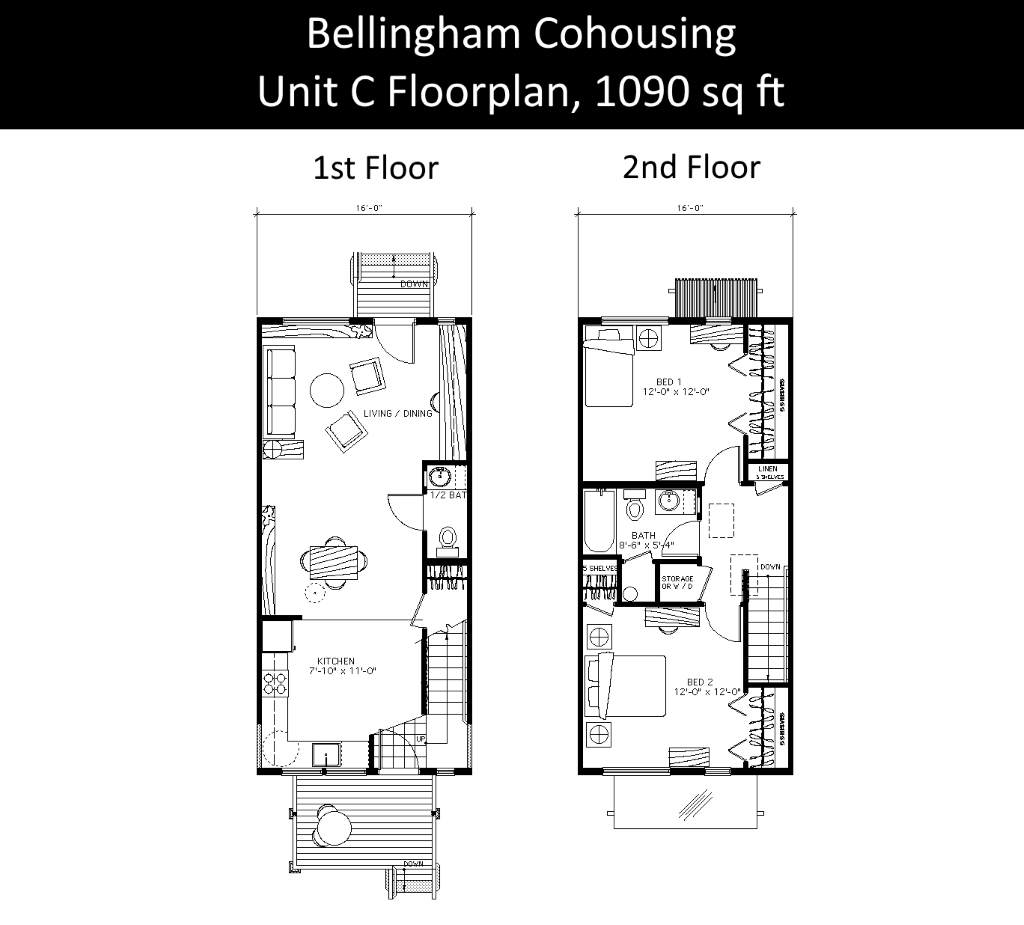
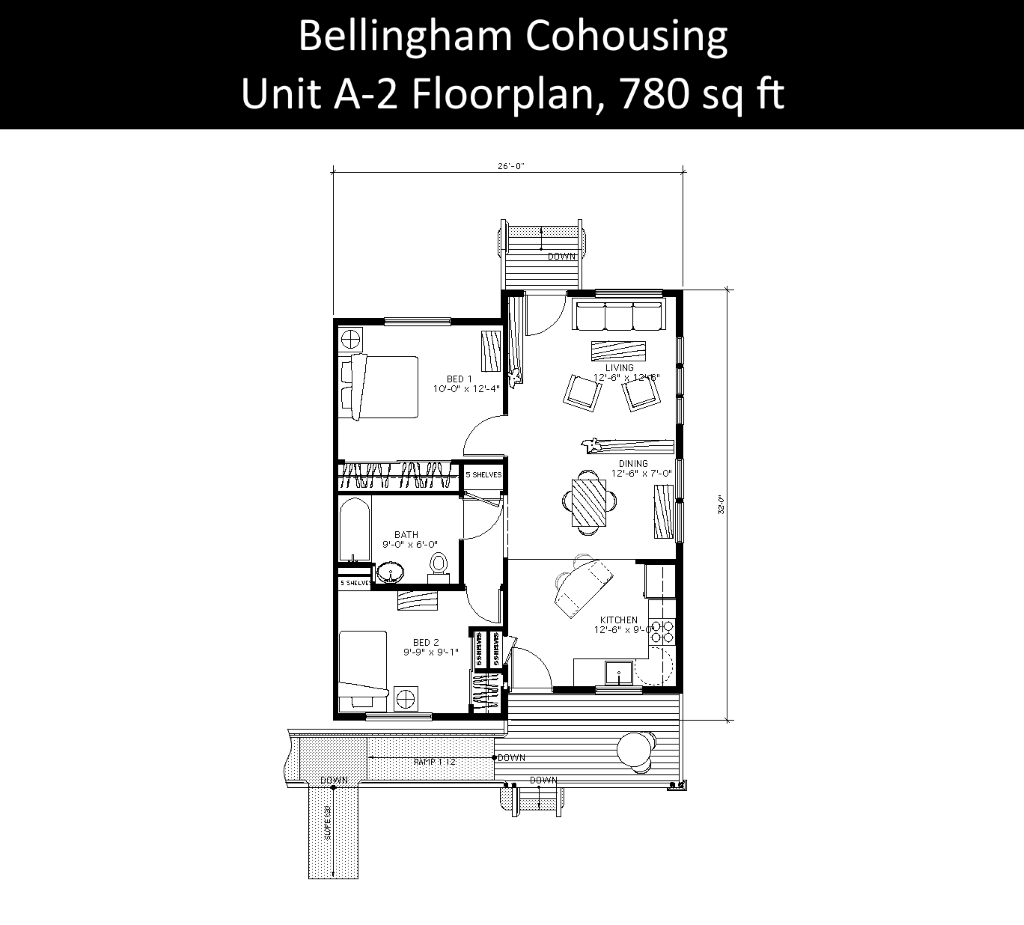

Personal Dwelling Units
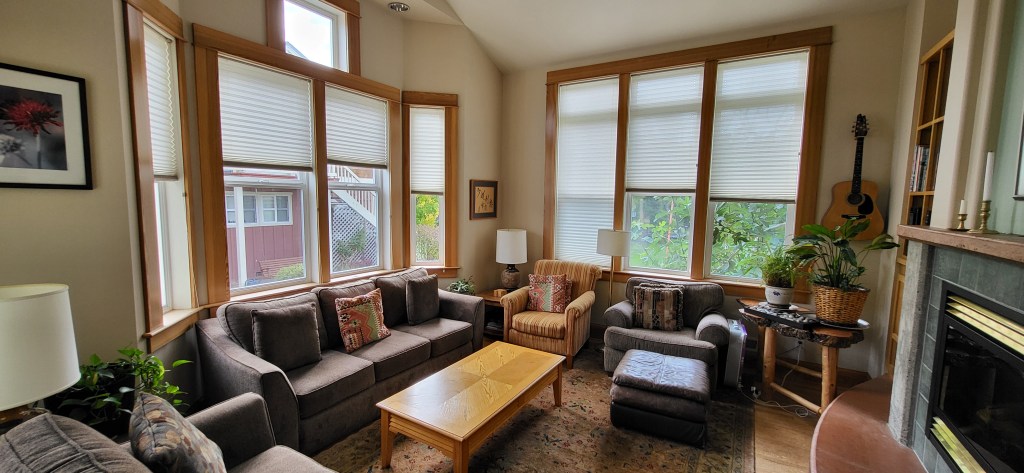
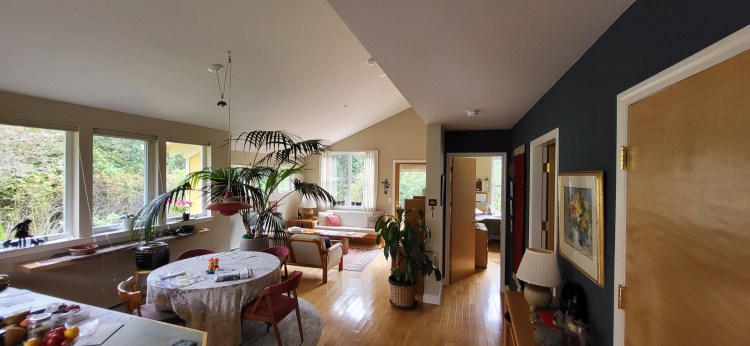
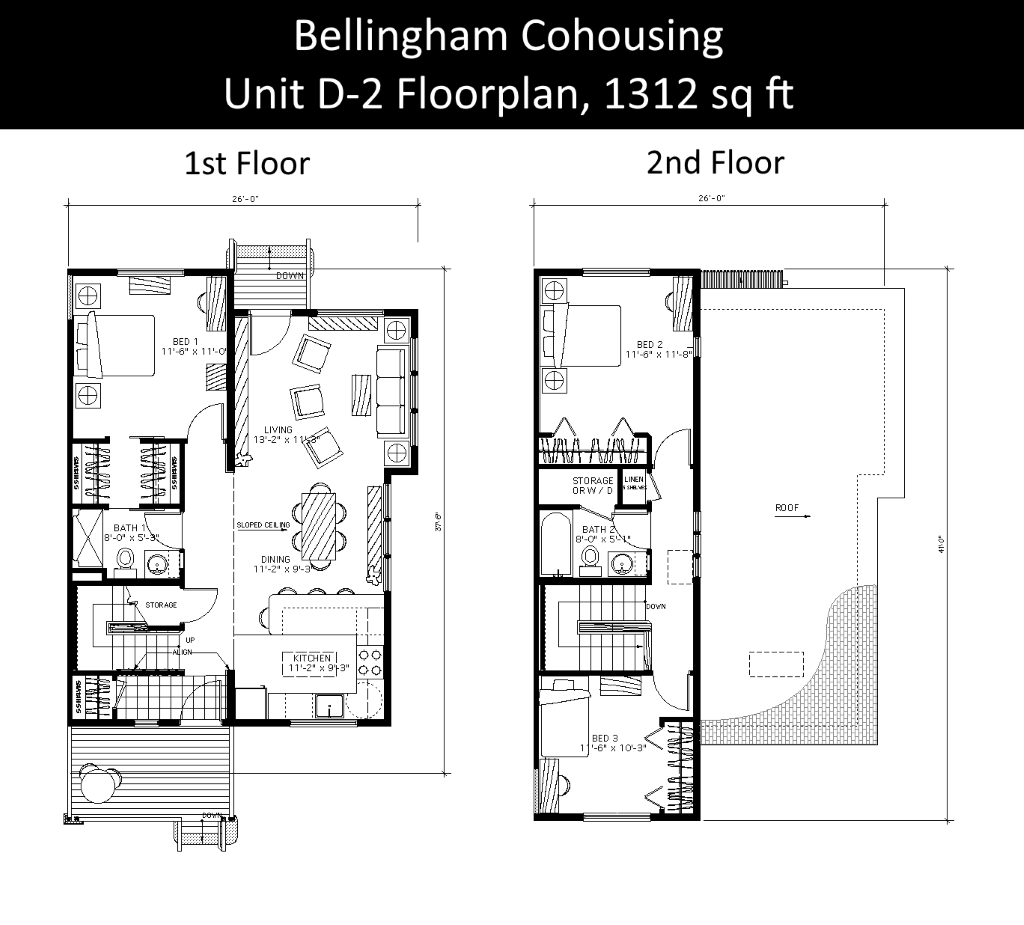
Just because there are amazing shared amenities does not mean that personal units are lacking. The site is broken down to unit clusters, with several units per building. They have 2, 3, and 4 bedroom units each with 1 to 2 bathrooms. Residents were adamant with me during our coffee discussion that these buildings did not have the trappings of regular multifamily housing because they paid attention to detail during construction. Soundproof separating walls between units ensure that people rarely hear their neighbors.
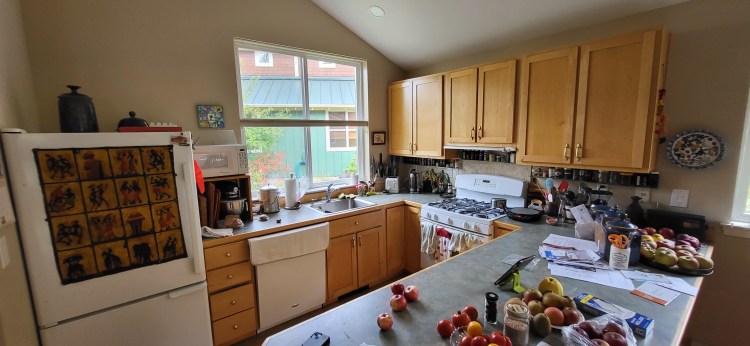
Within the unit, privacy is key. The room overlooking the shared path is alway the kitchen, with a window sink so that were usually eyes on the public realm. “Eyes on the Street” being a key term invented by urbanist Jane Jacobs. Every unit has a porch that visually creates the transition between public to semi private. I saw people sitting on their porches talking with neighbors on the path. More private rooms like bedrooms were tucked in the rear of the units.
Private amenities like personal kitchens and private back porches were actually quite spacious for the overall size of the units. When people hear about cohousing, many are apprehensive because they assume that you need to sacrifice all of your privacy and personal space to make room for shared areas. After visiting Bellingham, I know this to be simply not true.
This development cost about 6 million dollars in the late 1990s to complete, with the units originally selling for $99,000. Simply because it has become a very desirable place to live, vacancies are few and far between and usually happen when residents die or have a massive change in their life. A 2 bedroom unit that I toured is now on the market for over half a million dollars. In comparison, the average home price in Bellingham is about $650,000.
What I found to be most intriguing was the fact that Bellingham Cohousing partnered with a local land trust to ensure that several units remained permanently affordable through a limited shared equity model. There are people from all walks of life and all income levels living here: doctors, lawyers, teachers, and city employees have called this place home.

Shared Spaces
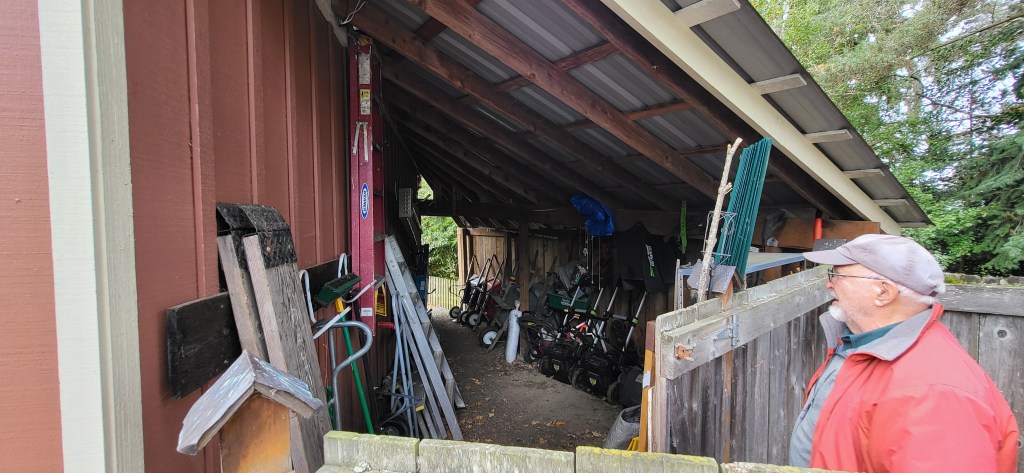
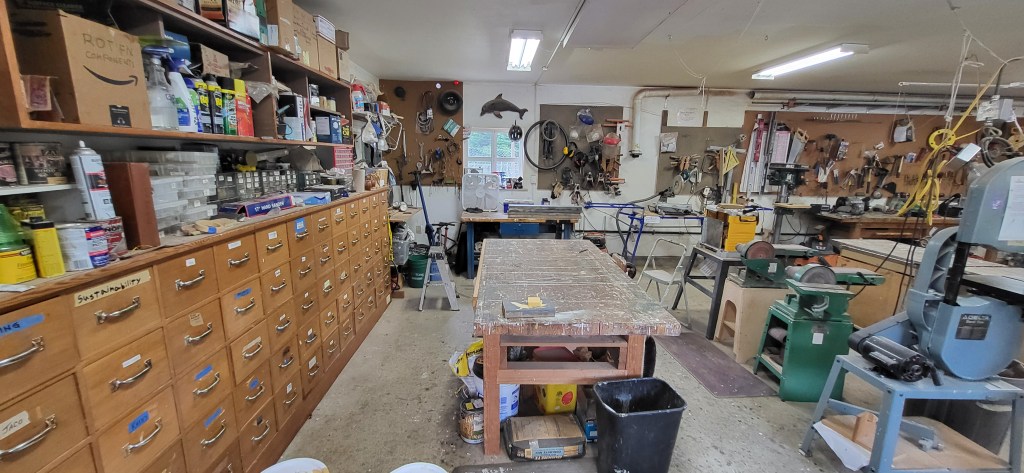
Outside of the common house, Bellingham Cohousing had numerous shared spaces for its residents. Adjacent to the parking lot, there was a well provisioned common workshop, complete with woodworkers teaching each other techniques. This shop is instrumental in maintaining the property, as many projects like fence repair and table building occur here. No more do you have to buy expensive tools that will mostly sit unused, just use the community shop! What I thought was interesting was the fact that they even had a budget for replacing tools that broke. So don’t worry if you somehow destroy a saw blade!
The community also has several shared garden spaces, complete with composting and beehives. The gardening team works to keep the plants alive. Working with others ensures that the vegetables will get taken care of.
There is also a shared gym and craft space for sewing and such, which produces some beautiful pieces of work like the tapestry in the common house.
Lessons Learned
Some of the liveliest discussions at our morning coffee were based around the question: “what would you do differently if you had to build it again?” I learned that the whole process of designing and building contained many headaches regarding the endless choices that had to be made. When value engineering occurred, residents lamented not going with the more expensive options first. Arguing over roof types, eventually after the project was built they had to replace all roofs with metal standing seam roofs. The price was higher, but maintenance costs came way down.
The biggest piece of advice I received was to hire an architect who understood the local climate. The California-based architect designed some building aspects not suitable for the Pacific Northwest’s rainy climate, and all of the wooden railings eventually had to be replaced with metal ones after rotting away. Residents also said it was imperative that the architect choose the color palette, because senseless fighting and slightly differing tastes caused some headaches early on. A landscape architect with a broad plan would have been so much easier than having residents decide what trees to plant where.
Some nitpicky things regarding the common house I thought were very interesting: the kitchen should have the ability to be closed off from the other spaces, as it is a loud place. In the same vein, the reason that residents’ twice-a-week shared dinners were reduced to a meal every 10 days was because not enough people wanted to do the cleaning. They highly suggested buying restaurant sets of plates and silverware and using a commercial dishwasher to clean and sanitize dishes in the fraction of the time residential dishwashers could. Lastly, commercial refrigerators and chest freezers are a must.
Before creating cohousing, many residents suggest having the “P” conversations with potential neighbors: pets, parking, participation, and parenting. How many dogs should be allowed? How big can they be? Should we let outdoor cats in the neighborhood? How to do parking? Who gets a garage unit? What does participation in cohousing governance look like? What are ways for people to participate who do not have ample time? How should kids be treated? What happens if they misbehave? Will there be shared childcare? These conversations must happen early and often to ensure common understanding.


Cohousing in Bloomington-Normal?
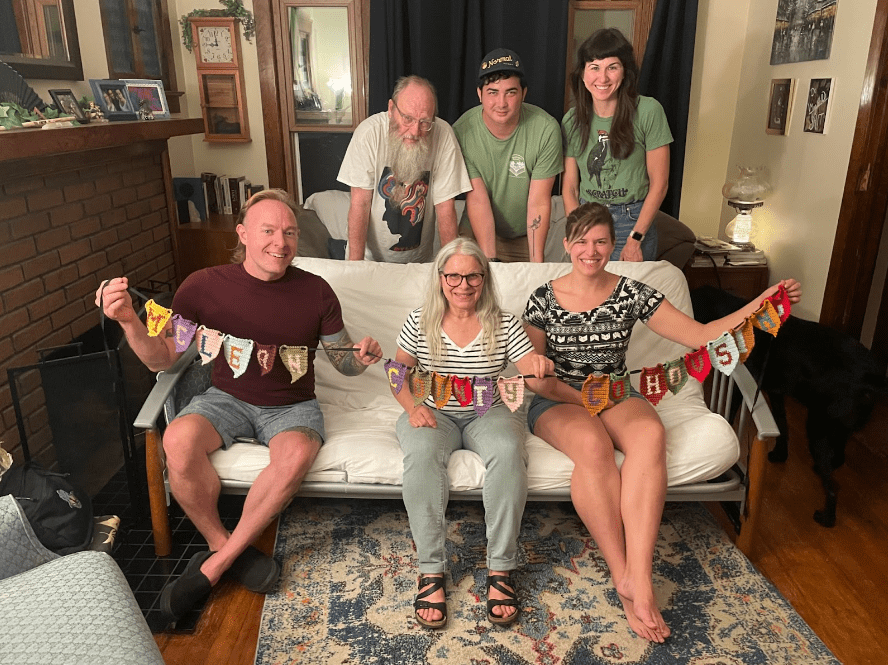
I visited Bellingham Cohousing as an unofficial representative of McLean County Cohousing, a group interested in all things about this movement. If you are interested in learning more about cohousing in Bloomington-Normal, find us at cohousingmcleanco@gmail.com. We’ll get in touch with you and share a quick coffee!
Our group right now is focused on educating locals on the merits of cohousing, and will be working with people on hopefully creating future cohousing developments here in town. We have visions of a cohousing community in a walkable neighborhood, hopefully this visit to Bellingham will inspire us into some action.
Discover more from Strong Towns Blono
Subscribe to get the latest posts sent to your email.
 Strong Towns Blono
yaaas need this for my mental health!!!
LikeLike