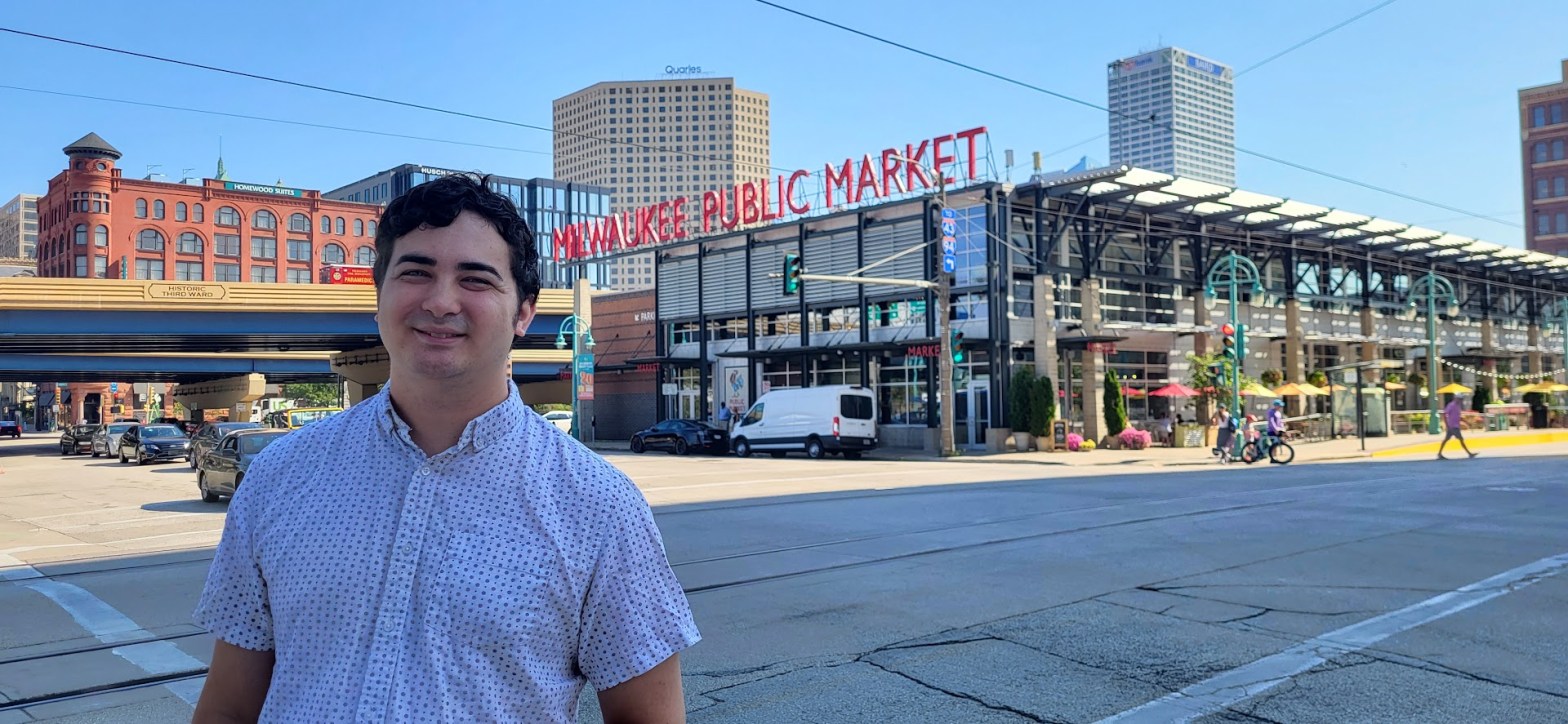
My fiancée and I went on an amazing road trip at the end of the summer, and now I am just finding time (by avoiding other pressing matters) to write about my experiences in some new urban environments. During my August trip, I visited Saint Louis, Kansas City, Topeka, Omaha, Minneapolis, and Milwaukee. I hope to share my thoughts in several longer form blog posts, each about an area of urbanism I found interesting and hopefully could steal for our benefit in Bloomington-Normal.
The first topic that aligns with Strong Towns is how each of these communities have cultivated successful public markets. I visited the market districts in Kansas City, Omaha, and Milwaukee and I fell in love with these places. Here are my observations:
Kansas City

Kansas City’s City Market entry sign right next to the streetcar stop. 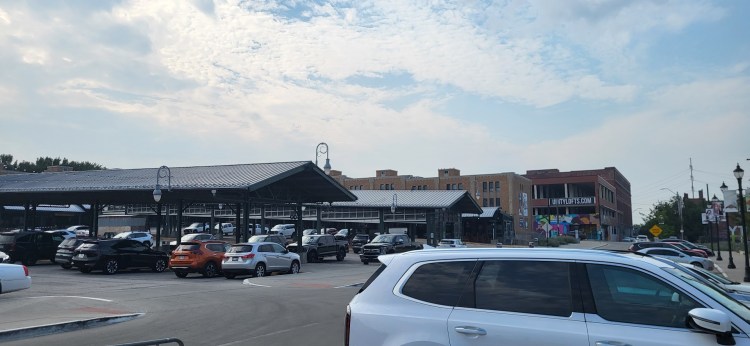
Temporary market structures also act as parking covers. 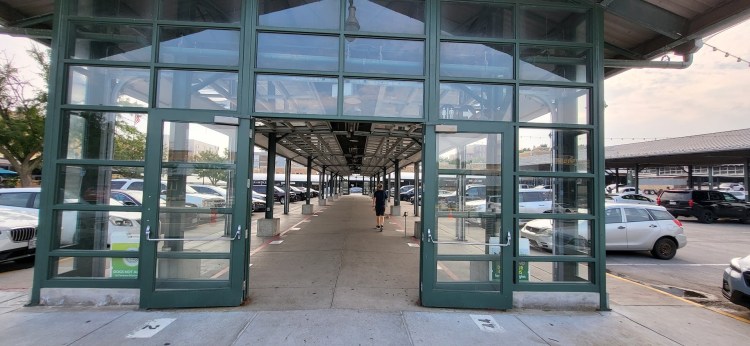
These can be closed in cooler months. 
Spaces marked for vendors with electrical access. 
Temporary vendor spaces next to permanent shops. 
Offices and other flex spaces on the upper floors with the entrances in the rear.
The City Market in Kansas City was an excellent example of a legacy public market space that has grown and adapted over time. It started off as a trading post on the confluence of the Missouri and Kansas Rivers. Since 1857, this farmers’ market has remained a popular staple of the community. It is great to have a history to work with, as Kansas City is used to large numbers of temporary vendors that fill up this market on a weekly basis. Over time, they have truly built wonderful infrastructure to support this popular attraction: several temporary market vendor pavilions, an arcade of space for more vendors, and even 40 spots for permanent shops.
Like many other cities, the downtown saw a decline in quality by the 1900s. This district was home to the red-light district, gambling halls, and other perceived “blight.” During the Great Depression the Works Progress Administration and civic actors raised funds to bulldoze much of the blight and construct the three temporary pavilions for the market. By 1972, the vision of a “festival marketplace” shopping and entertainment district gained traction. Many of the visitors drove because the streetcars lines were ripped up in the prior decades.
However, now the new KC Streetcar line travels around the entire market district and uses it as its northern anchor. Currently, the market is managed by a private company on behalf of the city.
Omaha

I will not spend much time on Omaha, as this is only a “public market” in spirit. The Old Market neighborhood is a collection of formerly industrial buildings that have been restored to residential and commercial use. This area had a strong sense of place, with preserved brick streets, buskers, carriage rides, and common decorations spanning blocks.
Milwaukee
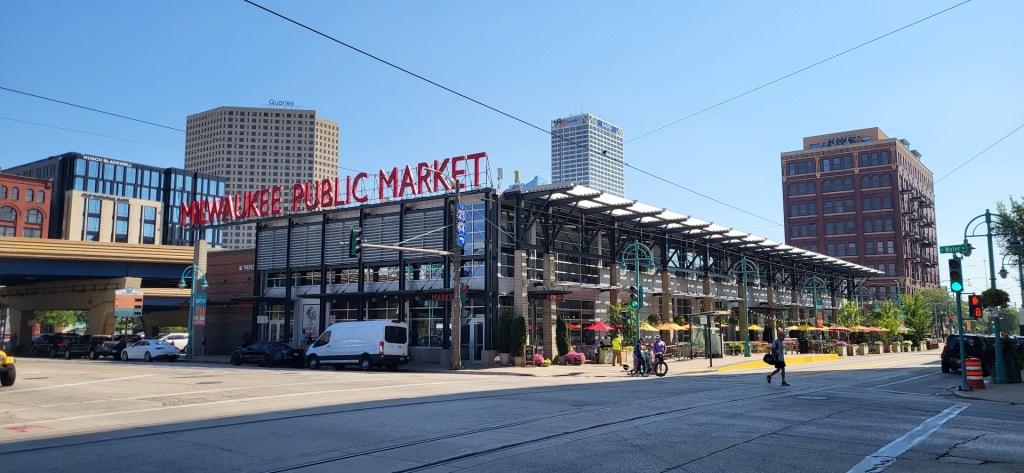


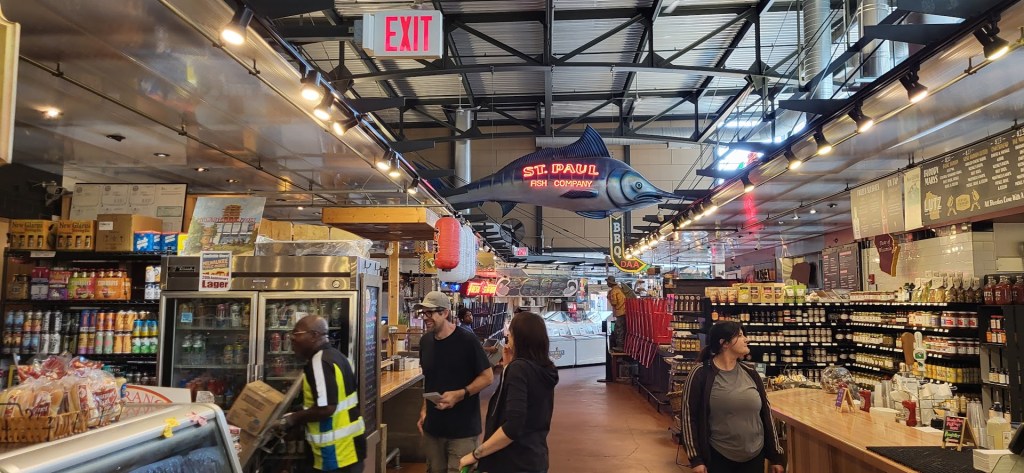
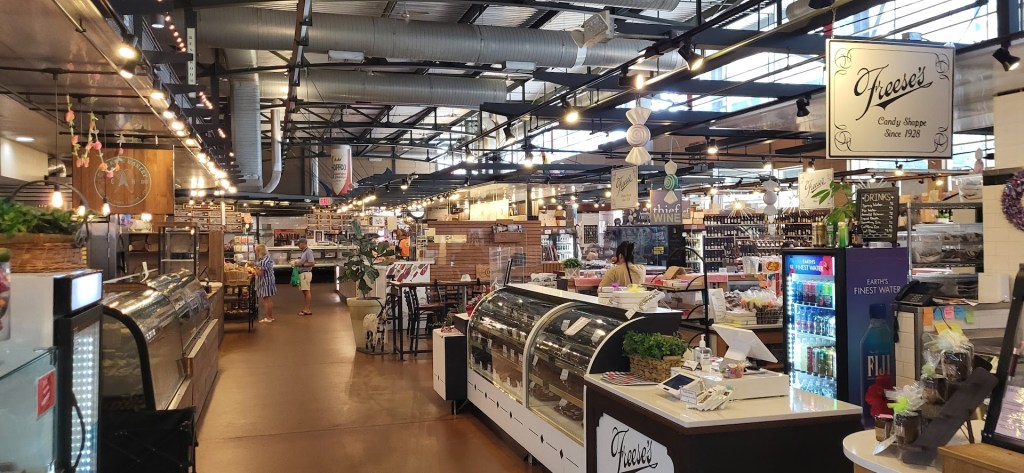
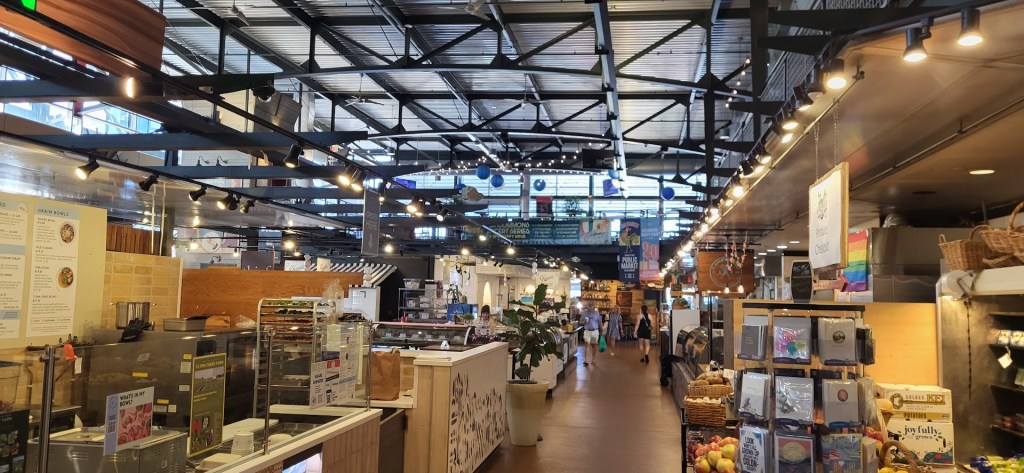

Last on this trip was the mighty Milwaukee Public Market. A recent creation, with its founding in 2005, the market is a purpose-built facility for local food vendors. Instead of the many ephemeral stall spaces for farmers like the KC City Market, the entire building footprint at the Milwaukee Public Market was set aside for more permanent businesses. Each stall has been curated and designed to fit the vibe of the location, and it does feel like many parts of one whole being rather than an assemblage of random things.
This is all part of the model here. On the second floor of the market was the main office, which contained the staff who oversaw the operations of the market as a whole. They spent immense amounts of time vetting and preparing new vendors, while also balancing the overall health of the market. In fact, it is this attention to vendor selection that saved it from nearly closing its doors in 2007. The market used to take a more hands-off approach with its limited real estate, but that was not bringing in the customers. Switching from mostly grocery and raw ingredients to prepared foods turned this institution the top ranked public market in the country several years in a row. They now consistently have no vacancy and a long wait list for new vendors.
Takeaways For Home
This style and size of market lends itself to historical inertia and the population size of Kansas City. That does not mean Bloomington-Normal cannot learn a thing or two from this! We have one of the most popular farmers markets in Central Illinois and we still do not have a permanent market building. Even if we constructed a simple pavilion, like one of the three they had in Kansas City, that would continue the market tradition in Bloomington near where it is held in the summers. Right now, the winter market is either held in the BCPA or the Arena, depending on other events. The farmers market would benefit from a centralized location through consistent branding and decreased logistics. Plus, during the summer months, a pavilion will protect shoppers from the rain!

I also loved how KC public transit worked seamlessly with the market there, as the free and frequent streetcars dropped people off from all over the city. The new location of the transfer center in Bloomington would be great if a market structure was built nearby, perhaps on the Market and Main parking lots.

Our Strong Towns group has worked with various stakeholders to envision a better downtown, and nearly every conversation included lowering the barrier to economic participation through the creation of a public market style building. Instead of renting out an entire storefront, someone only has to rent out a market stall and test their ideas.
We can glean from the Milwaukee Public Market model and the KC City Market model to create a space that has a curated space of fledgling businesses, that can create an anchor for customers, while also hosting more temporary market stalls people can rent for much shorter timespans to allow for a vibrant and thriving street life, more opportunities for businesses to seed and grow, and democratizes and localizes the economy.
Strong Towns is all about bottom-up movements and economies, but many times it has to take place in a top-down framework to allow it to grow. These public markets are excellent examples of that happening in real life. Bloomington should seek to invest in making our economy easier to participate in, as a healthy ecosystem of shops is much more resilient for our community than relying on big box stores on the fringes.
Discover more from Strong Towns Blono
Subscribe to get the latest posts sent to your email.
 Strong Towns Blono