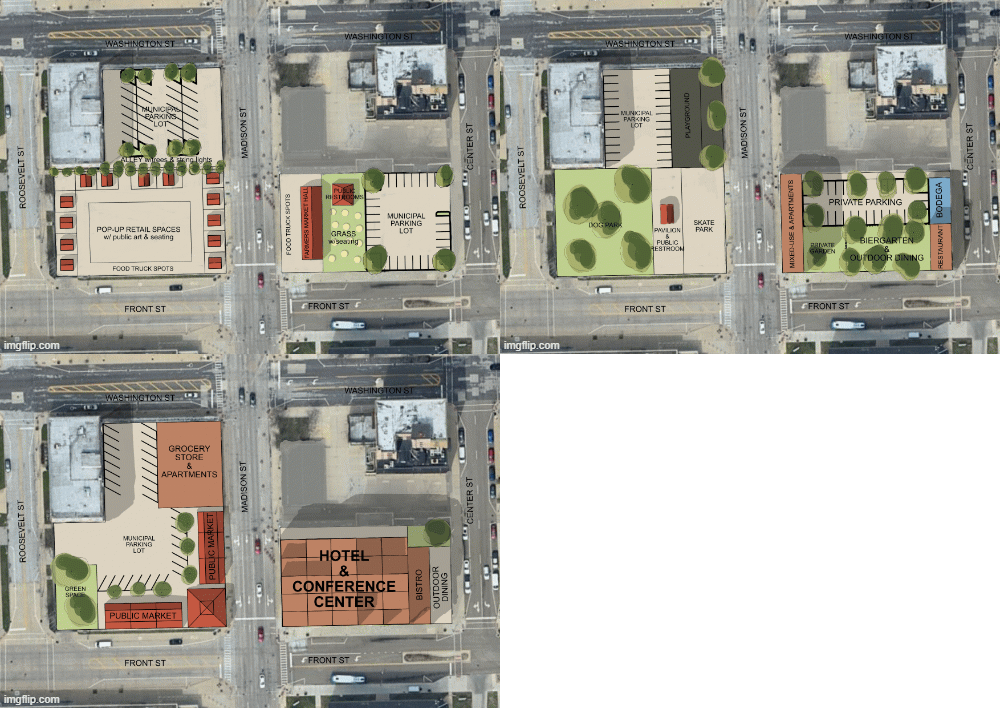
After publishing When the Wrecking Ball Comes, our Urban Centers Revitalization Committee wanted to provide alternate visions for this part of downtown. Therefore, this charrette was born.
A Note about This Project
The design charrette organizing team wants readers to understand that the recommendations put forth in this document are the result of a volunteer-driven process and NOT a directive from city staff, council, or any other officials. Therefore, all plans described are simply proposals meant to lead to meaningful conversations about the future of downtown’s development. If the city or any developer would like to implement any of these designs, we would be delighted to allow them!
The three proposed designs are meant not to be taken as indivisible projects. Parcels on the west side of Madison Street can be implemented independently of the parcels on the east side.
As this was a volunteer project, no money exchanged hands for professional services. All site plans, renderings, and layout design were completed pro bono. Cost estimates and architectural renderings are meant to provide a general sense of scale for these projects, but not to be taken literally. For developers interested in these projects, make sure to conduct due diligence when completing pro formas.
Click on the hyperlinks below to learn more about each specific proposal. To learn more about the process, scroll to the next section.
Low Intensity Proposal
Design team: Dakota Black, Team Lead | Austin Black | Zach Carlson | Katherine McCarthy | Anthony Crispin, UIUC School of Urban Planning
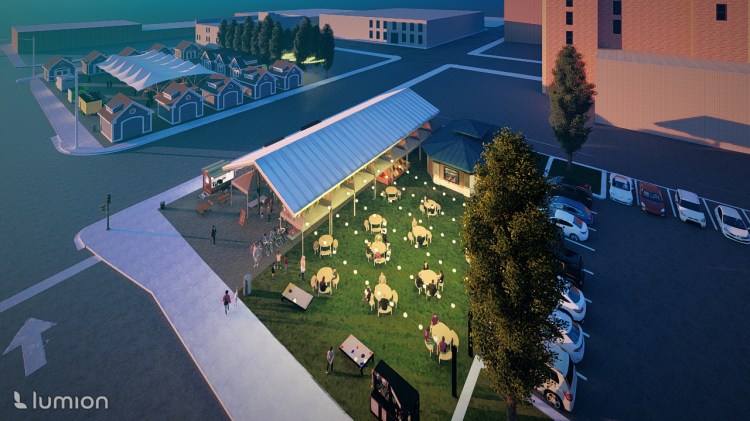
Aerial view of the new Front N Center campus showing parking. 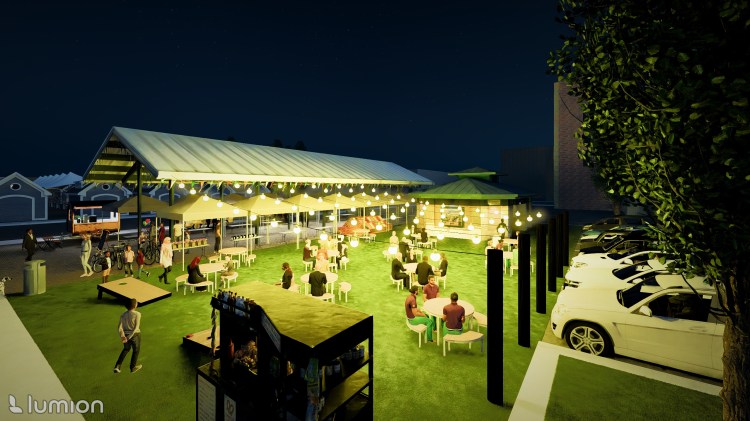
Green area for seating and dining next to the public restrooms and market structure. 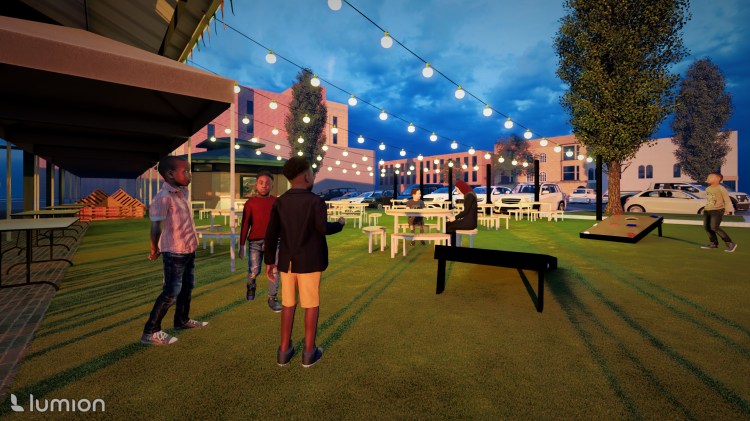
Programming and events will activate this public space. 
Farmers market hall allows for more vendor spaces in our bustling downtown. 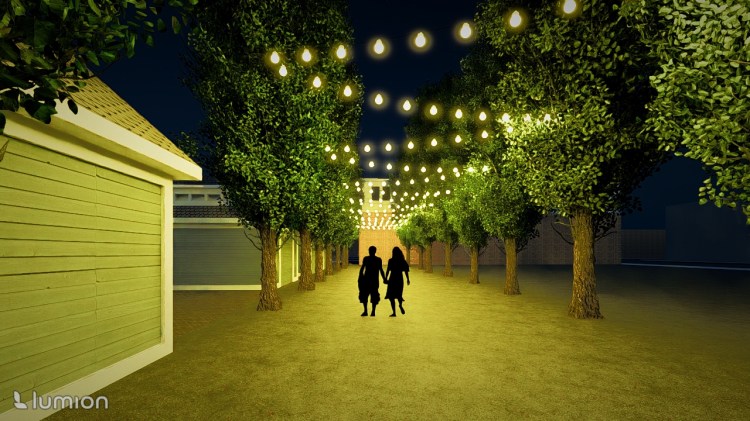
Alley of trees and string lights that separate the pop-up retail space and the parking lot to the north. 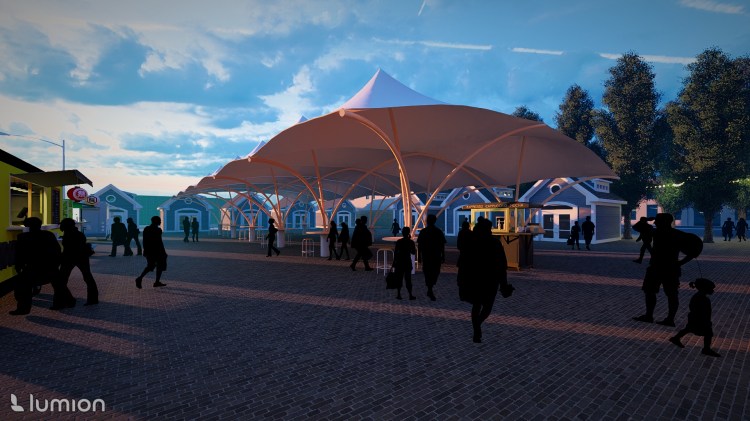
Pop-up retail space with tables and chairs in the center (public art not shown).
Medium Intensity Proposal
Design team: Tyler Pessler, Team Lead | Mark Adams, AICP | Colleen Zerebny | Kelby Cumpston | Brian Keith
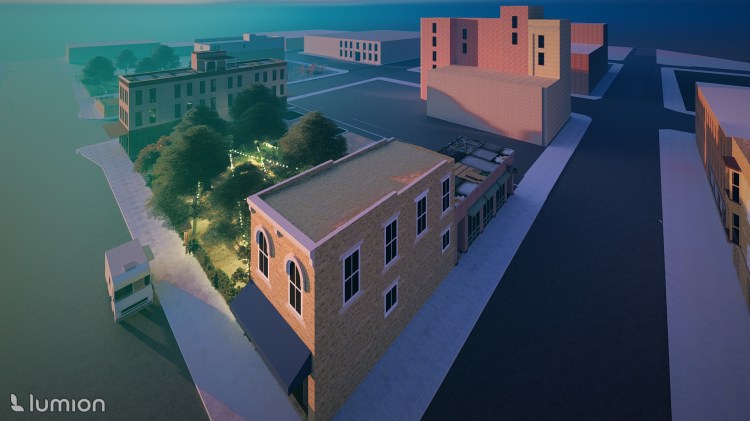
Aerial view of the new Front N Center campus showing the restaurant and apartment building. 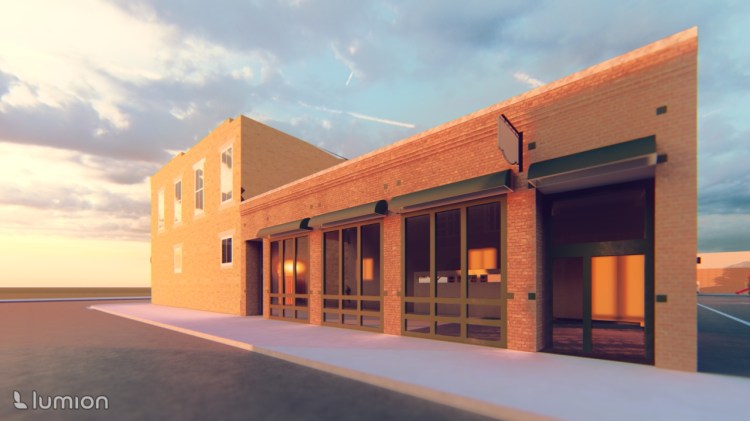
Bodega style grocery store for downtown on Center Street. 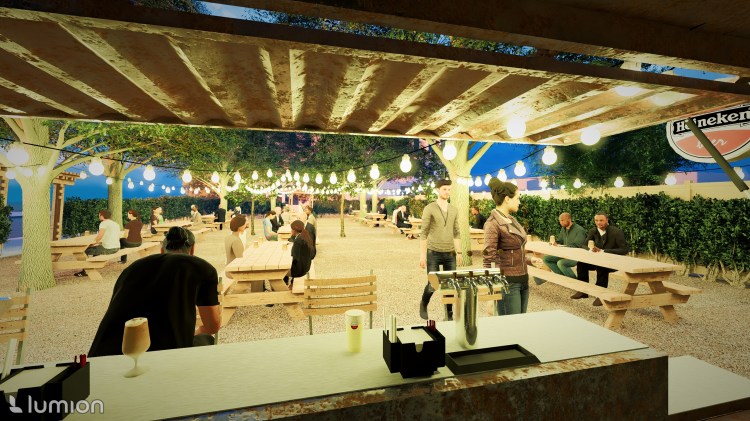
Biergarten and restaurant. 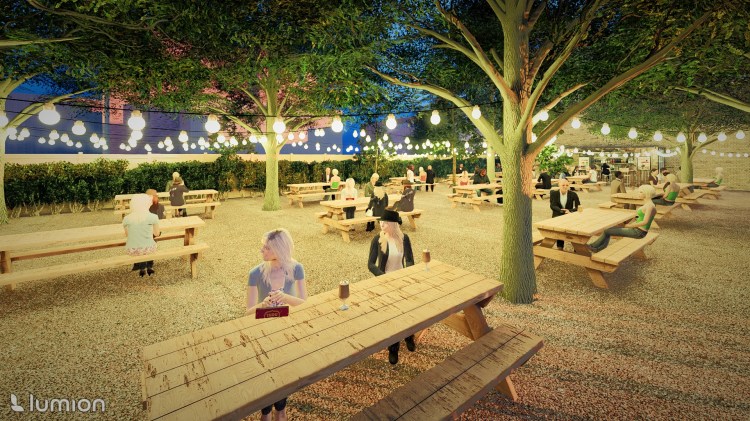
Biergarten and restaurant. 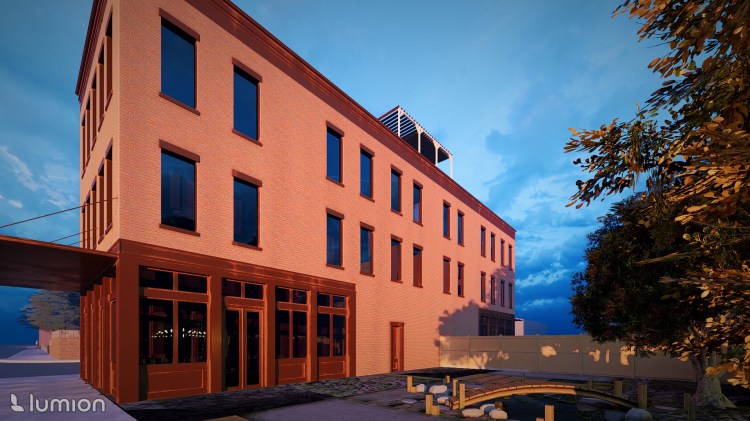
Apartment units with a rooftop deck and residential zen garden. 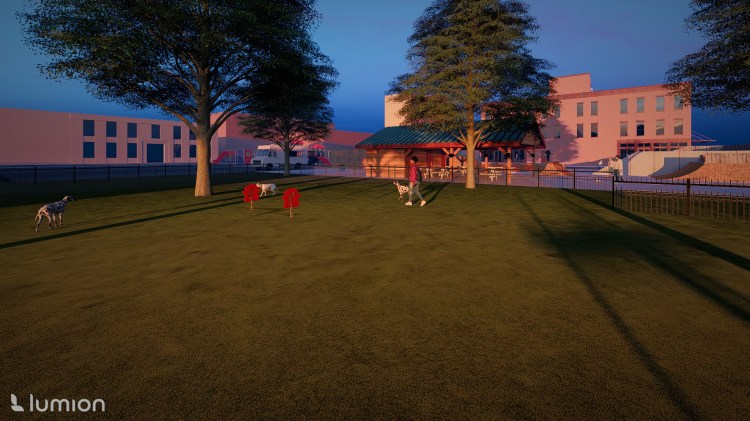
Dog park for downtown across the street from the arena. 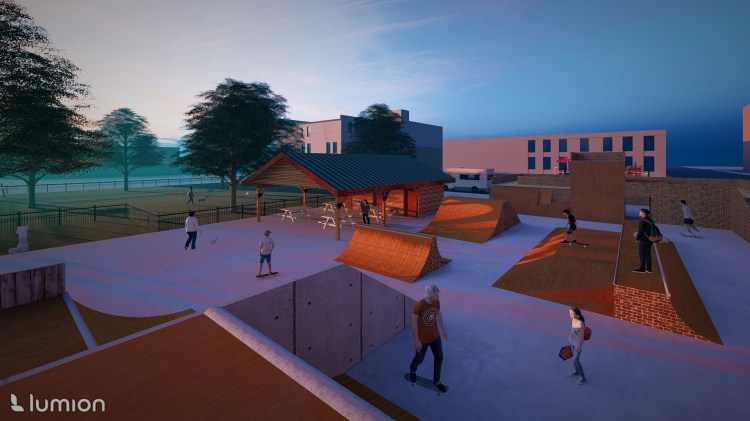
Skate park and pavilion on the east side of the old Butler lot.
High Intensity Proposal
Design team: Noah Tang, Team Lead | Dawn Peters | Joshua Maubach | Samantha Mlot | Hannah Horn
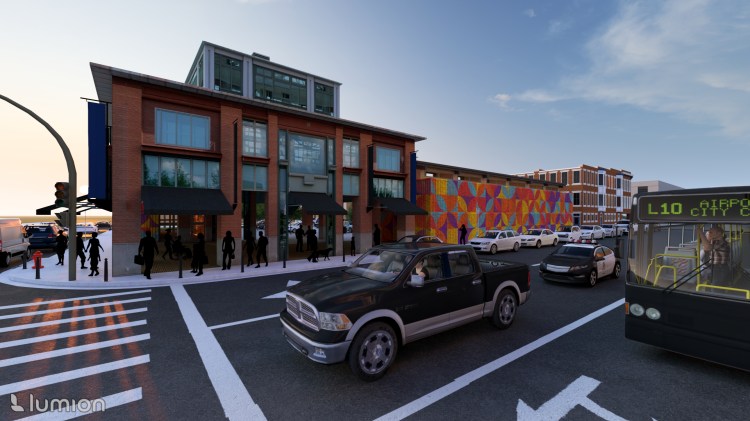
Corner of Madison and Front Streets looking west. Main entrance to the market hall with commissary kitchens. 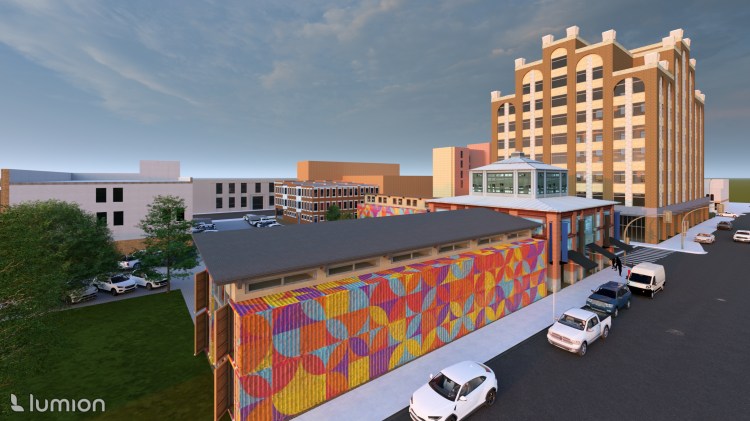
View from the coliseum. 
The 80-100 room hotel where the former Front N Center was located. 
Restaurant and bistro style seating on Center Street by the hotel. 
Interior of the market hall, with space for gathering and eating (tables and booths not modeled). 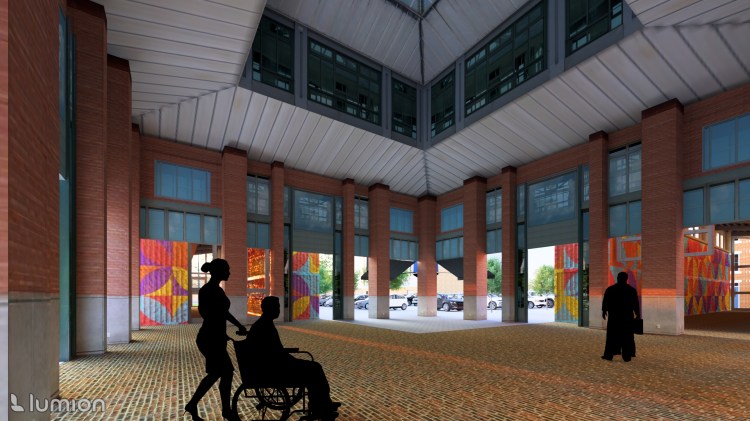
Urban grocery store with apartments above on the Washington Street entrance to the market campus. 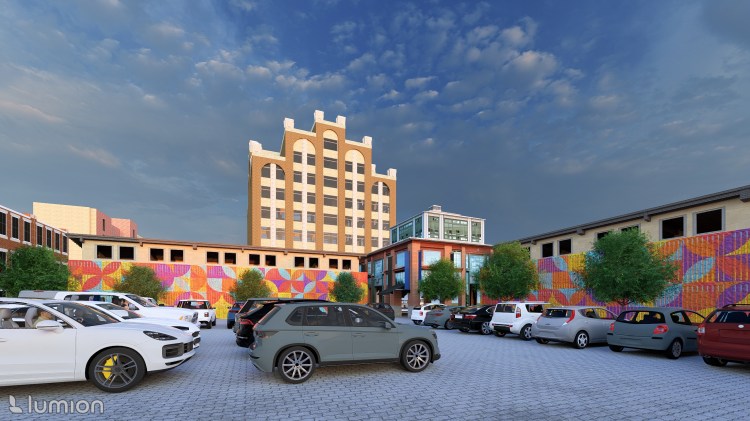
Parking lot of the market hall can double as an event space. Shipping containers have public art on them.
Existing Conditions
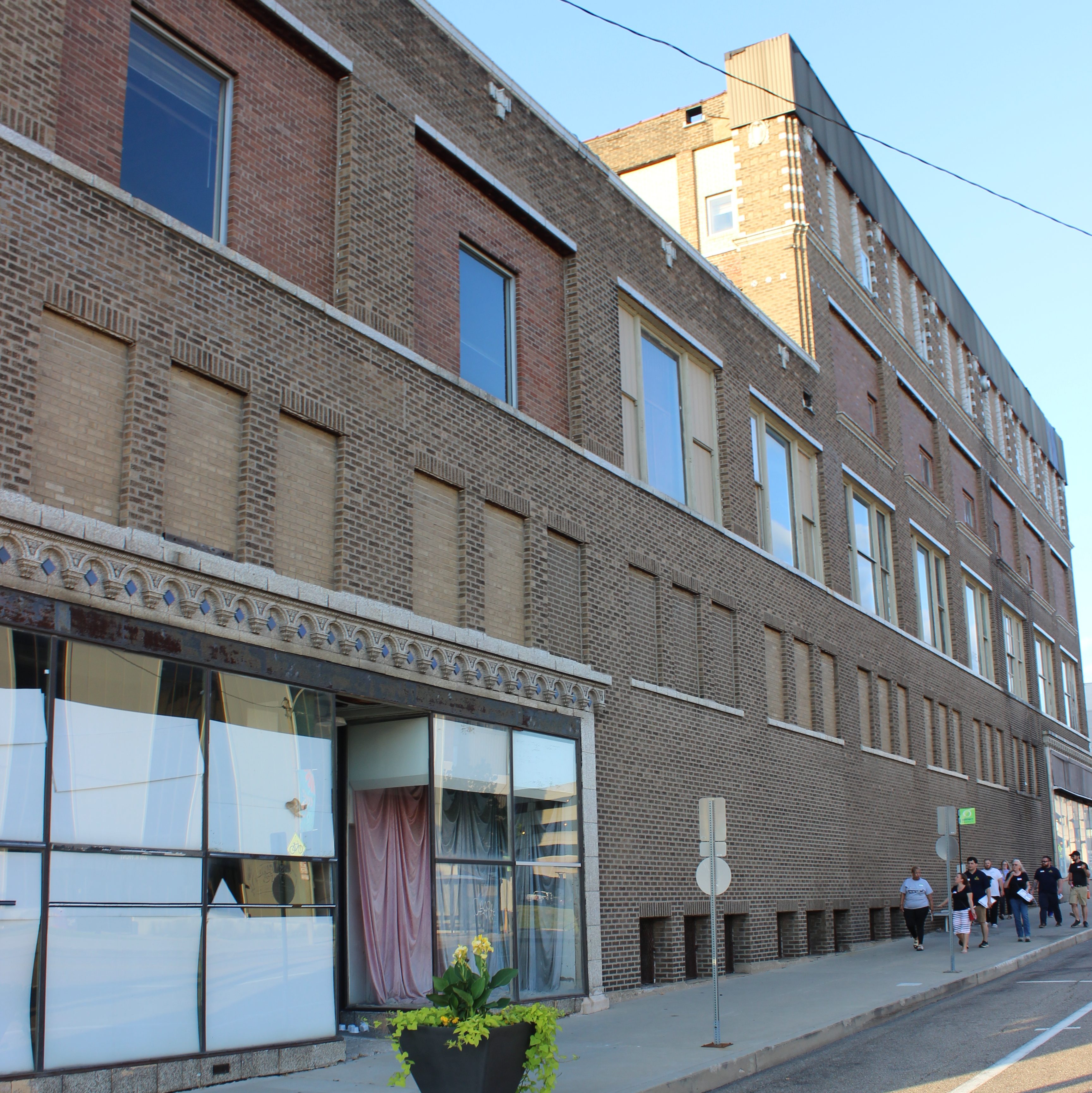
The Front N Center building and the adjacent DUI Countermeasures building, as well as the former Elks building across Madison Street, are being demolished after decades of mismanagement and neglect.
Once home to department stores, an early auto dealership, shops, bars, offices, fraternal halls, and other uses, these parcels fell on hard times as downtown hollowed out in the face of auto-oriented commercial development especially on the East Side.
During 2024 and 2025, city officials persuaded the building owners to sign over the properties in exchange for forgiveness of delinquent property tax payments. This gave the city a freer hand in guiding these parcels’ futures.
Studies revealed that buildings had deteriorated beyond the point where restoration was feasible. The city staff instead suggested razing the buildings to make way for 140 new surface parking spots. This would compensate for the demolition of the Market Street Parking Deck, which has reached the end of its lifespan.
The city hopes that the use for parking will prove temporary. A permanent surface parking lot on the same block as the landmark People’s Bank Building just southwest of the Museum Square would be a setback for downtown revitalization. The city manager has suggested that parking is indeed not the final goal for the parcels. That is why our organization decided to go through the design charrette process to envision better uses for these lots.
Overview
The purpose of this exercise was to identify alternatives to the current state of development on two highly visible but troubled blocks in Downtown Bloomington. A charrette is a collaborative process in which stakeholders, community members, designers, and architects brainstorm design.
The charrette focused on the lots of Front N Center and its vicinity would propose plausible alternatives to consigning these spaces to parking lot. Though the Urban Centers Revitalization Committee of Strong Towns Blono ran the exercise, a variety of community volunteers participated.
Process
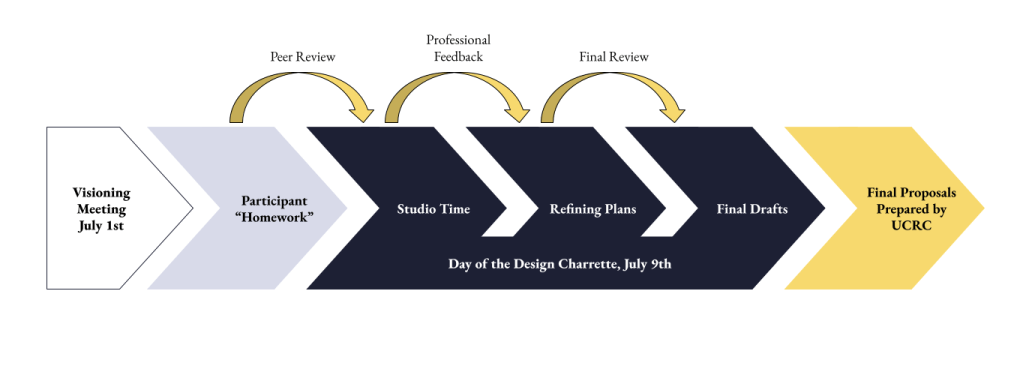
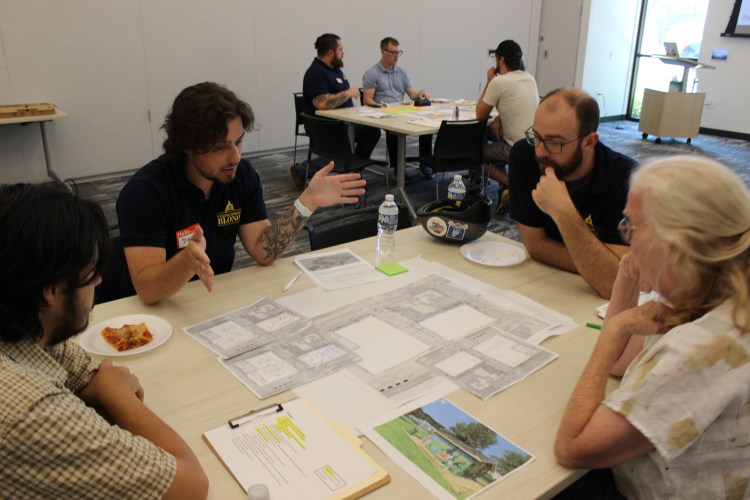
From start to finish, the charrette entailed planning and preparation that spanned several months. Community volunteers participated in a visioning meeting on July 1, 2025 and then in the actual charrette exercise on July 9.
The chart below sketches how the charrette process was organized. Volunteers brought sketches and ideas to share with their groups.
By the end of the charrette day, each group completed a final draft of a site plan, three sketches, and a summary of the project.
Visioning Meeting
On July 1, 2025, a group of Strong Towns members, downtown stakeholders, real estate development practitioners, and city staff met at the Bloomington Public Library to discuss their visions for these lots.
After reviewing Strong Towns principles and touring the sites, charrette participants worked together to build a shared vision of the project. This shared vision guided the sketched designs that participants would bring to the actual day of the design charrette.
Shared Vision
• Productive from a tax-rolls perspective
• Majority local ownership/owner-occupied
• Small parcels/mixed use
• Visually striking and inviting
• Many entrances along the street
• Some green space
• Noise reduction measures along Madison Street
• Style matches the rest of downtown
• Allowance for small bets
• Spaces for community and events
• Connected to the urban fabric

Support for This Charrette from Bloomington Plans
Our design team looked over various plans drawn up for the City of Bloomington regarding redevelopment in its core regions to ensure that our charrette aligned with those plans. Below is a non-exhaustive list of goals from two plans pertaining to downtown revitalization:
Downtown Development Strategy, 2013. Farr Associates
- Goal 2.1: Pursue public-private partnership and assistance opportunities, (64).
- Goal 3: Business recruitment and retention activities, (65).
- Goal 5: Protect Downtown’s historic character and encourage appropriate new development, (66).
- Goal 12: Reinforce the connections between Downtown and adjacent neighborhoods, (67).
City of Bloomington Comprehensive Plan, 2015.
- H-1. Ensure the availability of safe, attractive and high quality housing stock to meet the needs of all current and future residents of Bloomington, (61).
- H-2. Ensure reinvestment in the established older neighborhoods and compact development of the City, (66).
- ED-2. Foster a culture of entrepreneurship, (92).
- D-1. Continue to build a healthy Downtown that offers a range of employment, retail, housing, cultural and entertainment opportunities for all, (101).
Read the Full Report Here
Interested in bringing more walkable urbanism to Bloomington-Normal? Come join Strong Towns Blono and the Urban Centers Revitalization Committee to move the conversation towards progress. Please email president@strongtownsblono.com or come to a membership meeting to get involved.
 Strong Towns Blono